Composite joists are changing how builders think about floors, decks, and long-span structures. By combining materials such as steel and concrete, they can offer useful strength and stiffness while managing weight. The details matter. A joist that performs well on a drawing still needs consistent manufacturing, clear documentation, and practical support on site.
This guide introduces 10 suppliers of composite joists serving projects in different markets. It considers factors buyers can verify, including product range, technical information, customization options, quality processes, delivery capabilities, and customer support. A supplier’s website can provide a starting point, but it cannot answer every project question. Ask for current specifications, load data, connection details, and references relevant to your building type. Small differences count.
Choosing a supplier is not simply a matter of comparing prices. Span requirements, exposure conditions, installation methods, local project standards, and coordination with other trades can all affect the right choice. Even an established manufacturer may not suit every job. Some details are easy to overlook until installation begins; that deserves honest attention. The companies featured here are intended as a practical shortlist, not a universal ranking. Verify claims directly, compare like-for-like products, and consult qualified design professionals before making final decisions. Done carefully, that process can help project teams find composite joists and supplier support that fit the work, rather than forcing the work to fit a catalog.
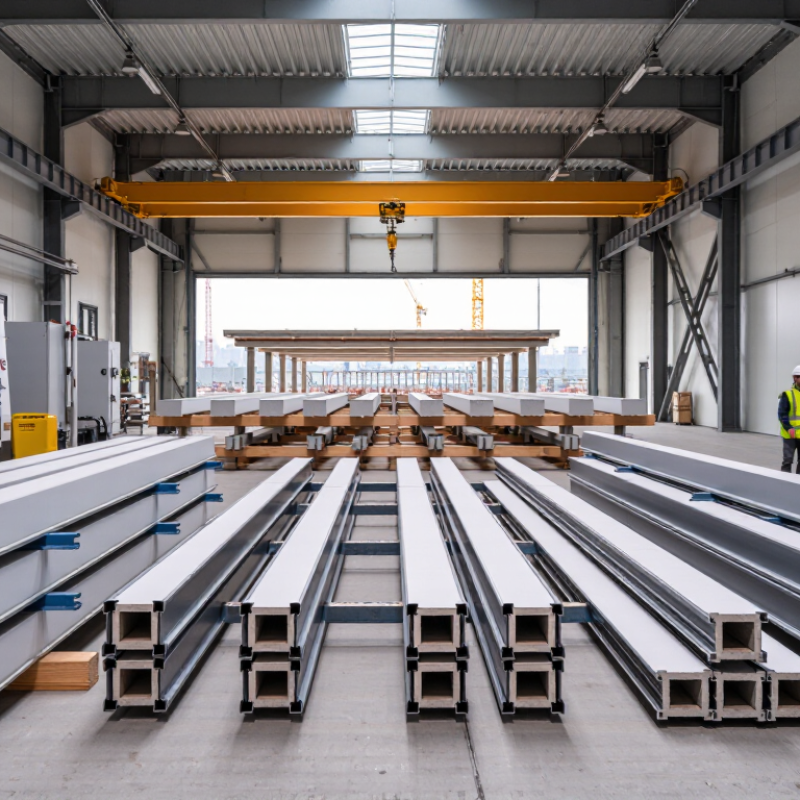
Composite joists are open-web steel members designed to work with a concrete floor slab. Welded shear connectors transfer force between the joist and slab, allowing both materials to resist bending together. That differs from a standard joist that simply supports floor decking. The distinction matters. The World Steel Association’s World Steel in Figures 2024 estimates that construction and infrastructure account for about 52% of global steel use. This figure describes a broad sector, not composite joists alone, but it shows the scale of steel’s role in building work.
These systems are used in offices, schools, hospitals, and other multi-storey buildings where long, open floor areas can reduce the need for interior columns. A typical floor may combine joists, metal deck, reinforcing steel, and poured concrete. Designers must consider loads during construction, floor vibration, fire protection, and openings for ducts or pipes.
A quiet office still needs a floor that feels steady underfoot. It is not a universal fix. Longer spans may help create flexible layouts, but they can also demand careful vibration checks and coordination with building services. One missed opening can complicate installation.
When evaluating composite joist suppliers, look beyond quoted price. Ask for engineering data that matches your project’s spans, loads, and deck requirements. Clear load tables and connection details help your design team check assumptions early. Ask how the supplier controls steel quality, welding, and dimensional tolerances. Request inspection records and sample documentation, not just a polished brochure. Details matter. A small mismatch in seat depth can complicate installation.
Check whether the supplier has delivered joists for projects with similar conditions, such as long spans or tight delivery windows. Ask for references and practical information: how were changes handled, and were replacement parts available? Review production capacity, packaging, and shipping plans against your construction schedule. A responsive contact is useful, but written answers are better. Compare lead times with realistic production milestones. Be cautious when every estimate sounds exact; projects change, and suppliers should explain what could affect timing or cost. A scorecard can organize the comparison, though it cannot remove every uncertainty. Sometimes the uncomfortable question is the useful one: what happens when a drawing revision arrives after fabrication begins?
Choosing among the ten leading composite joist suppliers worldwide requires more than comparing quoted prices. Buyers should check published load tables, design support, manufacturing tolerances, delivery capacity, and documentation for each project. Composite joists must work with the slab, deck, connections, and construction sequence—not just meet a span target on paper. Ask for project-specific calculations and clear details for openings, end supports, and temporary bracing. Small details matter.
The scale of the wider market offers useful context, but not a direct measure of joist demand. World Steel Association’s World Steel in Figures 2024 reports 1.89 billion tonnes of crude steel production in 2023, indicating the breadth of the steel supply base. Global Construction 2030, published by Global Construction Perspectives and Oxford Economics, forecast construction output rising 85% to US$15.5 trillion by 2030; this is a forecast, not a current market count. Supplier comparisons should also examine regional stock, lead times, material traceability, and the ability to coordinate with local engineers. A polished catalogue is not proof of consistent site performance. One limitation in any global shortlist is that public data rarely compares joist quality on equal terms. Verify references and shop drawings before committing.
Top steel-producing countries provide context for the industrial supply base. These figures are not a ranking of composite joist suppliers.
Crude steel production in 2023, million metric tonnes. Source: World Steel Association, 2024.
Composite joist suppliers vary in product range, engineering support, and the markets they serve. Some focus on open-web steel joists for long spans and lightweight roof assemblies. Others offer floor joists, deck systems, or coordinated framing packages. Compare actual load tables, available depths, bearing details, and connection options—not just catalog breadth. Small differences matter on site.
Market reach also shapes what a supplier can deliver. Regional manufacturers may offer shorter lead times and familiarity with local construction practices. International suppliers may provide broader product choices, but shipping distances and project coordination can complicate schedules. Ask where joists are fabricated, how orders are tracked, and whether technical assistance is available during design and installation. A wide service map does not guarantee quick answers.
Capabilities deserve close scrutiny. Look for documented quality controls, clear engineering submittals, and support for unusual spans or loading conditions. Request sample calculations and confirm that quoted specifications match the project drawings. A product sheet can look convincing. It is not proof of fit. Comparing suppliers is rarely tidy, and I would not rank them by price alone; service response, delivery reliability, and the clarity of technical documents can affect the job just as much.
Comparison of anonymized, region-based supplier profiles. These are market-level descriptions, not rankings or verified product catalogs for specific companies. Composite joist availability and terminology vary by market; some suppliers offer composite beams or steel-deck floor systems instead of proprietary composite joists.
| Profile | Primary market | Relevant product systems | Common applications | Typical capabilities | Key selection considerations |
|---|---|---|---|---|---|
| Profile 01 | United States and Canada | Open-web steel joists used with concrete slabs and steel floor deck; composite steel beams are also common. | Commercial buildings, warehouses, schools, and industrial facilities. | Joist layout coordination, long-span framing, shop fabrication, and integration with metal-deck floor assemblies. | Confirm the specified joist system is designed for composite action; check loading, vibration, fire protection, and local code requirements. |
| Profile 02 | United Kingdom and Ireland | Composite steel beams with concrete slabs and profiled steel decking; cellular beams are used where service openings are needed. | Offices, retail buildings, hospitals, and multi-storey construction. | Design coordination around building services, beam-and-deck detailing, and fabrication to project-specific drawings. | Check slab-to-steel connection details, fire design, deflection limits, and the applicable national design provisions. |
| Profile 03 | Germany, Austria, and Switzerland | Composite steel-concrete beams and floor systems; open-web joists may be offered for selected building types and spans. | Industrial buildings, offices, transport facilities, and large-span structures. | Structural engineering coordination, detailing, welded fabrication, and integration with concrete construction. | Establish whether the proposal is a joist, composite beam, or other floor system; compare span, weight, and erection requirements. |
| Profile 04 | France and Benelux | Steel-concrete composite beams, profiled-deck floors, and project-specific open-web framing. | Commercial, logistics, industrial, and public-sector buildings. | Design-and-fabrication coordination, deck and beam detailing, and adaptation to local construction sequencing. | Verify deck compatibility, temporary construction-stage support needs, corrosion protection, and project-specific compliance. |
| Profile 05 | Nordic countries | Composite beams and steel-deck floor assemblies; joist-based solutions are project-dependent. | Industrial, commercial, institutional, and infrastructure-related buildings. | Structural design coordination, prefabrication, and detailing for efficient site assembly. | Review fire resistance, durability, erection conditions, and the interaction between the steel frame and concrete slab. |
| Profile 06 | Italy and Spain | Composite steel-concrete beams, profiled steel decking, and fabricated steel framing for commercial and industrial floors. | Commercial developments, manufacturing, logistics, and renovation projects. | Project-specific engineering, steel fabrication, floor-system coordination, and support for varied building layouts. | Compare the complete floor assembly, including deck, slab, connections, fire protection, and installation sequence. |
| Profile 07 | Japan | Steel-concrete composite floor and beam systems; joist configurations depend on project design and local practice. | Commercial buildings, factories, public buildings, and redevelopment projects. | Detailed engineering coordination, precision fabrication, and adaptation to project-specific structural and construction requirements. | Check applicable local codes, seismic design requirements, connection detailing, and construction-stage stability. |
| Profile 08 | South Korea | Composite steel framing and deck-supported concrete floors; open-web or joist-based systems are project-specific. | High-rise commercial buildings, industrial facilities, and large developments. | Engineering and fabrication coordination for multi-storey construction and repeatable floor layouts. | Assess connection design, fire performance, delivery logistics, and coordination with the wider structural frame. |
| Profile 09 | China | Steel-concrete composite beams and deck-supported floor systems; project-specific joist solutions may also be available. | Industrial parks, commercial developments, logistics facilities, and public buildings. | Engineering, fabrication, and supply coordination for projects with varied building sizes and delivery schedules. | Confirm applicable standards, material traceability, quality documentation, and whether the supplier provides design or fabrication only. |
| Profile 10 | Australia and New Zealand | Composite steel-concrete beams and profiled-deck floor systems; joist solutions depend on the design and supplier’s product range. | Commercial buildings, warehouses, education, and industrial construction. | Design coordination, fabricated steel supply, and detailing for local construction and installation conditions. | Confirm compliance with applicable local standards, project design loads, fire requirements, and deck-to-frame details. |
Note: Composite action generally depends on the engineered connection between the steel member and concrete slab. Confirm the supplier’s exact system, design responsibility, tested or documented performance, applicable standards, and project-specific capacity before specification.
Choosing a supplier for composite joists starts with the project, not a catalogue. Share the engineer’s design loads, span lengths, deck profile, slab depth, and opening locations before requesting a firm quote. Ask for shop drawings that show camber, shear connections, and erection details. Small coordination gaps can mean costly site changes. It happens.
The World Steel Association’s World Steel in Figures 2024 reports 1,892.2 million tonnes of crude steel production worldwide in 2023. That figure describes steel output, not the availability of custom joists. Check a supplier’s production capacity, material traceability, documented quality controls, and realistic delivery dates. Request comparable projects and confirm that the proposed joists meet the applicable Steel Joist Institute specifications. One detail worth questioning: are connections and shipping included in the price, or only the joists?
Tips: Send every bidder the same drawings and load criteria. Compare installed cost, lead time, and submittal support—not just the unit price. Have your structural engineer review substitutions before approval. A rushed comparison can miss a useful option.