
Choosing an Intelligent Pole manufacturer is not simply a matter of comparing product photos or headline prices. These systems can combine lighting, cameras, environmental sensors, communications equipment, and public-service displays on one structure. For global buyers, the challenge is finding a supplier that can integrate the right components, document performance, and support installation after delivery.
This guide introduces 10 manufacturers serving different markets and project needs. It considers product range, customization, engineering capabilities, quality controls, and available technical support. Details can change by model and region, so buyers should confirm specifications directly with each supplier. Ask for drawings, materials data, warranty terms, and references from comparable installations. A pole designed for a coastal walkway may face very different corrosion and wind demands from one installed beside an urban road. Small details matter.
A shortlist is only a starting point. The strongest choice depends on the site, local requirements, network compatibility, and maintenance plan. Some manufacturers may offer broad integration; others may focus on a narrower set of applications. Neither approach is automatically better. Review each claim carefully, and request evidence where performance affects safety, uptime, or long-term cost. Even a well-presented proposal can leave questions unanswered. That is worth noticing. The following manufacturers offer a practical starting point for comparison, not a substitute for project-specific technical review.
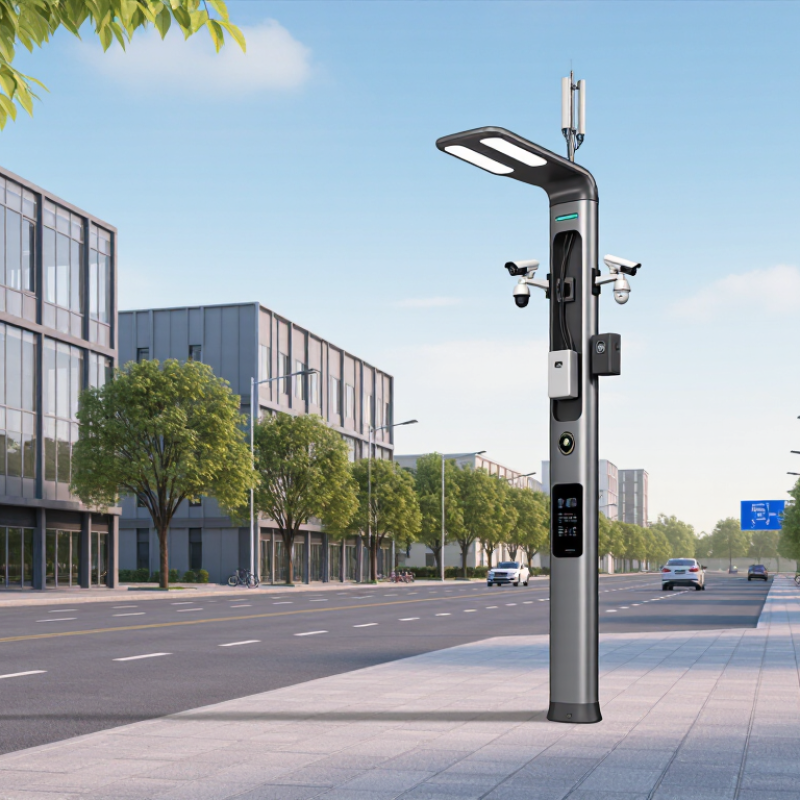
An intelligent pole is more than a streetlight with extra equipment attached. It combines lighting, communications, sensors, and power within a shared structure. Depending on the project, it may monitor traffic, air quality, weather, or pedestrian activity. The pole’s height, mounting points, and access panels affect how well those components work together. Small details count.
Core technologies include LED lighting, wireless networks, environmental sensors, cameras, and edge-processing units. Edge computing can analyze selected data near its source, reducing delays and network traffic. Connectivity may use cellular, Wi-Fi, or other radio systems; the right choice depends on coverage, capacity, and operating costs. Power management is equally important, especially when several devices share one supply. Cybersecurity, secure updates, and controlled access should be considered during design, not added as an afterthought.
For buyers, the key question is whether components can be maintained and upgraded without replacing the entire pole. Check compatibility, heat management, cable routing, and access for technicians. A sensor may perform well in testing but struggle when dust, rain, or nearby buildings interfere. Integration is not always elegant, and adding more devices can make servicing harder. A practical specification leaves room for future changes while keeping today’s system manageable.
Connectivity is one core technology in an intelligent pole, alongside sensors, edge computing, power management, and platform software. Values show reference peak downlink rates in Mbps on a logarithmic scale: NB-IoT Cat-NB1 (0.026), LTE Cat 1 (10), LTE Cat 4 (150), and the 5G IMT-2020 peak data-rate target (20,000). These are theoretical reference figures, not expected field speeds; actual performance depends on network conditions and deployment.
Intelligent poles turn ordinary street furniture into useful infrastructure. They can combine adaptive lighting, traffic sensors, public Wi-Fi, air-quality monitors, and small-cell connectivity. On a busy avenue, one pole might dim its lamp after midnight while reporting a blocked lane or rising particulate levels. Small details matter. The United Nations’ World Urbanization Prospects 2018 projects that 68% of the world’s population will live in urban areas by 2050. That growth makes shared, space-efficient infrastructure increasingly valuable.
Connectivity is another key application. ITU’s Facts and Figures 2023 estimated that 5.4 billion people were online, while 2.6 billion remained offline. Connected poles can help extend network access along streets, transit routes, and public spaces, though deployment alone cannot close the digital divide. They may also support emergency communications and real-time transport information.
Still, integration is not effortless. Too many devices can make a pole cluttered, and exposed equipment faces weather, vibration, and vandalism. Maintenance access deserves attention early, not after installation. Sensor readings also need careful interpretation; one monitor cannot represent an entire neighborhood.
Comparing intelligent pole manufacturers worldwide requires more than reviewing product photos or headline specifications. Start with the intended site: a coastal road, a public square, and a logistics yard place different demands on equipment. Ask for documented options covering pole height, wind loading, corrosion protection, access panels, and foundation interfaces. A supplier should explain how cameras, lighting, sensors, and network equipment share power and space without blocking maintenance access.
Look closely at integration and evidence. Request wiring diagrams, communication protocols, thermal details, and sample commissioning records. Check whether the supplier can demonstrate lighting control, remote fault alerts, and secure software updates in a test environment. Clear answers matter. So does traceability: material certificates, inspection procedures, and defined warranty terms make later service less uncertain. Compare spare-part availability and technical support across the actual deployment region, not just the factory’s home market.
Manufacturing capacity is only one part of delivery reliability. Ask how prototypes are tested, how production changes are recorded, and how packaging protects finishes during long-distance transport. A site trial can reveal awkward details, such as a connector that is difficult to reach from a service hatch. No scorecard is perfect. Weight each criterion against local climate, maintenance skills, and project priorities, and record any assumptions that remain unverified. A polished proposal is useful, but repeatable evidence is better.
A practical, evidence-based comparison framework for evaluating suppliers worldwide. The table compares capabilities and verification points rather than naming or ranking companies.
| Comparison Criterion | Why It Matters | Evidence to Request | How to Compare Suppliers |
|---|---|---|---|
| 1. Structural Design and Wind Loading | Pole height, attachments, local wind conditions, and foundation design affect structural safety and service life. | Project-specific calculations, material specifications, drawings, foundation details, and the design codes proposed for the installation location. | Check that calculations cover the complete installed assembly, including cameras, luminaires, antennas, signs, and other attachments. Confirm that the applicable local structural requirements are identified. |
| 2. Corrosion Protection and Materials | Outdoor poles are exposed to rain, humidity, pollution, and, in coastal areas, salt-laden air. | Base-material grade, coating or galvanizing specification, coating inspection records, and any project-specific corrosion testing. | Compare the stated protection system against the site environment and maintenance plan. Ask how coating damage, cut edges, and repaired areas are treated. |
| 3. Ingress and Impact Protection | Electrical and communications equipment needs suitable protection from dust, water, and mechanical impact. | Enclosure ratings and supporting test documentation. IEC 60529 defines IP-code classifications; IEC 62262 defines IK impact-protection classifications. | Check the rating for each relevant enclosure, not only the pole as a whole. Confirm that the rating applies to the assembled product and its intended installation conditions. |
| 4. Electrical Safety and Load Capacity | Lighting, radios, sensors, displays, and other devices must operate within the available electrical supply and safe load limits. | Electrical single-line diagrams, load schedules, protection-device details, grounding and bonding information, and equipment compliance documents. | Compare the declared capacity with the proposed equipment list, including starting loads and future expansion. Verify electrical requirements against local regulations. |
| 5. Lighting Performance and Compliance | Lighting performance depends on the luminaire, optics, mounting height, controls, and the lighting requirements of the site. | Luminaire datasheets, photometric files, lighting calculations, control details, and applicable product documentation. IEC 60598 covers requirements for luminaires. | Compare project-specific lighting calculations and applicable local standards rather than relying only on lamp wattage or general product claims. |
| 6. Communications and Interoperability | Smart-pole systems may combine equipment from different vendors and must connect to local networks and management platforms. | Supported interfaces, network diagrams, API or protocol documentation, integration test results, and radio-frequency specifications for wireless equipment. | Confirm compatibility with the buyer’s network and platform. Verify that wireless equipment supports the required local frequency bands and has necessary market approvals. |
| 7. Cybersecurity and Data Management | Connected cameras, sensors, controllers, and network devices can introduce cybersecurity and data-handling risks. | Device-update policy, access-control approach, security documentation, data-flow description, vulnerability-handling process, and support for required buyer controls. | Assess the complete system and its operating model. IEC 62443 may be relevant to industrial automation and control-system security, depending on project scope; it is not a blanket certification for every smart pole. |
| 8. Environmental and Regulatory Compliance | Requirements vary by country and may cover electrical safety, radio equipment, lighting, materials, and installation. | Declarations and test reports applicable to the specific products and destination market, plus details of the standards and certification scope. | Check validity, issuing body, product model, and destination-country applicability. Do not assume that a certificate for one component covers the complete pole system. |
| 9. Manufacturing Quality and Traceability | Consistent production and traceable components help reduce defects and simplify inspection, maintenance, and warranty claims. | Quality-control procedures, inspection records, material traceability, production test plans, and relevant management-system certificates. | Verify the scope and validity of any ISO 9001 certificate and ask how inspections are recorded for the actual products supplied. |
| 10. Lifecycle Support and Total Cost | Purchase price alone does not reflect installation, energy use, maintenance, software support, replacement parts, or disposal costs. | Warranty terms, spare-parts policy, maintenance documentation, software-support period, lead times, installation requirements, and lifecycle cost assumptions. | Compare costs and service commitments over the same analysis period. Confirm exclusions, response times, replacement-part availability, and responsibility for system updates. |
Buyer note: Standards and regulatory requirements depend on the product configuration and destination market. Request current documentation for the exact models and project scope, and verify certificates with the issuing organization where appropriate.
Choosing among ten leading intelligent pole manufacturers for global buyers requires more than comparing product photos. A capable supplier should explain how lighting, cameras, environmental sensors, and communication equipment fit on one structure. Ask for drawings showing cable routes, access doors, mounting heights, and load limits. These details affect installation and future maintenance. Request test records for weather resistance, corrosion protection, electrical safety, and structural performance. Clear documentation matters.
Tips: Confirm local power and network needs before requesting a quote. Check spare-part availability and firmware support. Ask for a sample installation plan.
A reliable manufacturer will discuss site conditions, not just standard specifications. Coastal salt, strong winds, heat, and dust can change material and coating choices. Compare warranty terms, delivery schedules, and after-sales response times in writing. Request references for projects with similar climates and equipment combinations. Then verify what each reference actually covered. A brochure can look convincing, but it cannot show how quickly a service team responds. Buyers may also need to revisit their own assumptions; one design rarely suits every street. Look for a supplier willing to document limits and adjust the configuration transparently.
Global buyers should treat an intelligent pole as both a structural asset and an electrical system. Standards depend on destination, configuration, and intended use. Check local wind-load requirements, corrosion protection, grounding, and electrical safety before approving drawings. IEC 60598-1 covers general luminaire safety, while IEC 60529 defines IP enclosure ratings. ISO 1461 specifies requirements for hot-dip galvanized coatings. These references help frame review; they do not replace local project approvals. Ask suppliers for material certificates, coating-thickness records, weld inspection results, and structural calculations. Paperwork matters.
Customization should begin with the site, not a catalogue. Confirm pole height, arm reach, foundation details, cable access, and loads from luminaires, cameras, sensors, or communication equipment. The UN Department of Economic and Social Affairs projected that 68% of the world’s population would live in urban areas by 2050 in its 2018 World Urbanization Prospects. That trend raises pressure for adaptable urban infrastructure, but it does not make every site alike. One detail is easy to miss: adding equipment later can change wind loading and maintenance access.
Support quality is measurable. Request dimensioned drawings, wiring diagrams, photometric files where relevant, installation guidance, spare-part availability, and stated warranty terms. The International Energy Agency’s 2023 report, Electricity Grids and Secure Energy Transitions, says annual grid investment needs to exceed $600 billion by 2030, up from about $300 billion. This is grid-wide context, not a smart-pole market estimate. Compare suppliers on documented testing and response times, not claims alone. A checklist can still miss awkward site conditions; review the first installation with local engineers.