Top Light Gauge Steel Suppliers for Global Buyers
Choosing a light gauge steel supplier is not simply a matter of comparing prices. Global buyers also need consistent dimensions, dependable lead times, and clear technical support. A coil that arrives with uneven coating or out-of-tolerance thickness can slow production and create costly rework. Small details matter.
This guide explores what distinguishes capable suppliers, from material traceability and quality checks to export experience and communication across time zones. Buyers should review mill certificates, coating specifications, forming requirements, and sample policies before placing large orders. Ask how a supplier handles changes in demand, delayed shipments, or defects. The answers can reveal more than a polished product page.
Supplier capabilities vary by region and product range. Some focus on framing profiles, while others provide coils, accessories, or custom sections. No single supplier suits every project. A builder working to a tight schedule may value local stock, while a manufacturer may prioritize repeatable tolerances and production capacity. These trade-offs deserve careful review, and published claims should be checked against references or documented processes where possible.
The following overview offers a practical starting point for comparing leading options. It is not a substitute for technical verification. Specifications differ, and I would not assume that a strong first impression guarantees reliable delivery. Look closely. A well-matched supplier can support stable production, but the buyer still needs to define requirements clearly and confirm them before ordering.
Understanding Light Gauge Steel and Its Global Applications
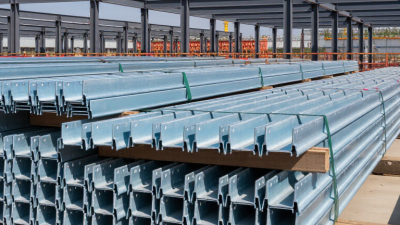
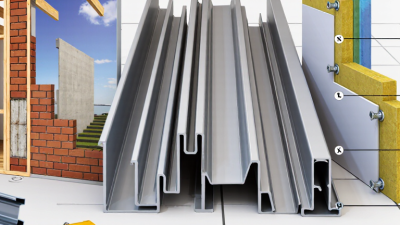
Light gauge steel is made by cold-forming thin steel coils into channels, studs, tracks, and roof sections. The process creates strong, repeatable profiles without the weight of many traditional structural materials. A worker can carry a wall stud across a small site with little effort. That matters where access is tight or installation time is limited.
Light gauge steel appears in housing, offices, modular buildings, interior partitions, and roof framing. It can also suit factories that need consistent components. But design still matters. Openings, connection points, load paths, and fire or acoustic requirements affect the final system. Small details matter. A profile that looks right on a drawing may not fit the local design conditions.
Global buyers should compare more than price. Check steel thickness, coating type, dimensional tolerances, and test documentation against project specifications. In coastal areas, corrosion protection deserves close attention; a standard coating may not be enough. Ask suppliers how bundles are protected during transport, too. Bent edges and wet packaging can create costly delays. One assumption is easy to miss: products made for one market may not match another market’s engineering expectations. Confirm requirements with the project’s qualified design team before ordering.
How Light Gauge Steel Suppliers Serve International Markets
Light gauge steel suppliers serve international buyers by coordinating more than production.
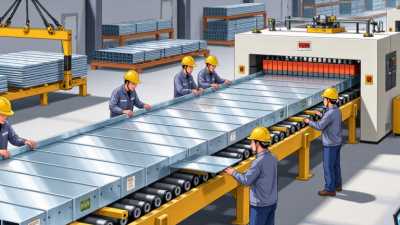
They confirm thickness, coating, profile dimensions, and bundle lengths before fabrication. For overseas projects, packing matters too: strapped bundles, protected edges, and readable labels can reduce handling damage. Suppliers may also provide inspection records and clarify lead times for production, port handling, and inland delivery. These details can prevent costly rework.
Cross-border orders need clear communication.
Buyers should share drawings, preferred measurement units, required tolerances, and delivery dates. Suppliers can check whether their forming equipment suits the profile and whether packaging fits the shipping route. Samples or first-article checks may reveal fit problems before a full shipment. Still, documents cannot remove every risk. A drawing may leave a fixing detail unclear, and time-zone delays can slow corrections. A detailed quote is not a guarantee of a smooth process.
Tips
Request a written specification, coating details, bundle dimensions, and inspection evidence. Confirm who manages export packing and freight milestones. Keep one approved drawing version. Small details matter.
Key Criteria for Evaluating Suppliers
For global buyers, supplier review should start with evidence, not a polished catalogue. The World Steel Association’s World Steel in Figures 2024 reports 1,892.2 million tonnes of crude steel production in 2023. That scale shows why documented chemistry, coil origin, and batch traceability matter. Request mill test certificates linked to each shipment, with measured thickness, yield strength, zinc-coating mass, and dimensional tolerances. Samples should match production coils, not hand-picked trial pieces. Small detail. Big risk.
Check whether production and testing follow applicable standards, such as AISI S240 for cold-formed steel framing, alongside destination-market requirements. Request recent third-party test reports for tensile strength, coating adhesion, and dimensional consistency. Verify report dates and specimen identification numbers. A factory visit can reveal coil storage, rust staining, roll-former maintenance, and packing quality. Photos help, but they are not an audit.
Commercial checks deserve equal weight. Compare monthly capacity with order peaks, actual lead-time records, packaging protection, and claim-resolution logs. Ask how nonconforming bundles are isolated and replaced. The World Steel Association’s production figure covers crude steel, not light-gauge output, so it does not prove a supplier’s capacity. Paperwork can still look perfect. Treat one clean sample as a starting point, not a verdict.
Steps for Comparing Quotes and Verifying Supplier Capabilities
Compare supplier quotes only after aligning the scope. Ask each bidder to state base-metal thickness, steel grade, coating mass, profile dimensions, tolerances, and included accessories. A low price can hide thinner steel or excluded fasteners. Request a sample calculation, production lead time, and packaging details; then compare freight and inspection costs separately. Small gaps matter. World Steel Association’s World Steel in Figures 2024 reports 1,892.2 million tonnes of crude steel production in 2023. In a market this large, traceable material records help distinguish a documented supply chain from a persuasive sales sheet.
Verify capability with evidence, not claims. Request mill test certificates linked to heat numbers, coating records, dimensional inspection results, and relevant quality-system certificates. Check whether the supplier’s roll-forming equipment can hold the specified profile and thickness consistently. Ask for recent project references with comparable spans, loads, and delivery volumes. Review drawings and test reports with your engineer; a certificate alone does not prove suitability for your design. For environmental disclosures, request product-specific environmental product declarations where available. UNEP and GlobalABC’s 2024 Global Status Report reports that buildings and construction represented 34% of global energy demand and 37% of energy- and process-related CO2 emissions in 2022. That broader context makes transparent material data useful. No checklist catches everything. Leave room for independent inspection, and record unresolved assumptions before signing.
International Standards, Logistics, and Import Considerations
Global buyers should match each light-gauge steel order to the destination market’s product requirements before comparing prices. ASTM A1003/A1003M covers steel sheet used in cold-formed framing; EN 10346 addresses continuously hot-dip-coated steel flat products. These standards are not interchangeable. Ask for mill test certificates showing grade, thickness, coating mass, and mechanical properties. Check whether the project specification requires a particular standard or permits an equivalent. Paperwork matters.
Import planning needs equal care. UNCTAD’s Review of Maritime Transport 2024 reported that maritime trade grew 2.4% in 2023 and forecast 2.0% growth for 2024. That does not predict a shipment’s arrival date, but it underlines why buyers should confirm port schedules, transit times, and freight terms before production. Clarify Incoterms, cargo insurance, customs classification, duties, and required import documents with a qualified broker. Small errors can hold a container.
Packaging deserves a close look. Coiled or bundled steel can trap moisture during long sea voyages, especially when condensation forms inside a container. Specify dry, secure packing, edge protection, and clear bundle labels; agree on photo records before loading. A spreadsheet cannot catch every mismatch. Compare the packing list with the purchase order and certificates, including dimensions and bundle counts. Requirements differ by country, and a supplier’s standard documents may not satisfy the importer’s local process.
Galvanized Coating Designations for Light Gauge Steel
Indicative coating mass values help global buyers compare specifications when evaluating steel supply and import requirements.
Values represent the stated coating mass across both sides: ASTM A653 designations G30, G60, and G90 are approximately 90, 180, and 275 g/m²; EN 10346 designations Z100, Z140, Z200, and Z275 are 100, 140, 200, and 275 g/m². Designations and test methods are not automatically interchangeable. Confirm the required standard, base steel grade, tolerances, and inspection documents with the supplier before ordering.