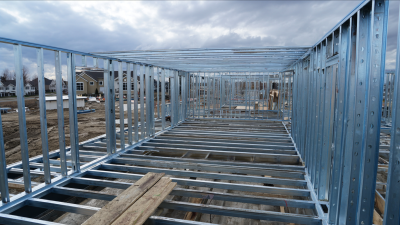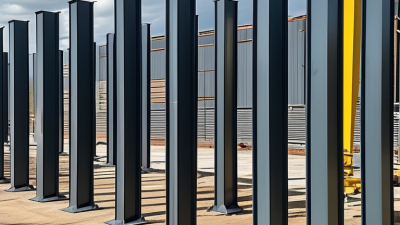
Choosing reliable panel systems manufacturers requires more than comparing prices or browsing polished factory photographs. Global buyers must examine material specifications, production capacity, testing procedures, installation support, and export experience. A manufacturer may offer impressive samples yet struggle with consistent tolerances, protective packaging, or replacement parts. These details become costly when projects cross borders.
Building-science expert Joseph Lstiburek has stated, “The building enclosure is a system.” That principle remains highly relevant when evaluating panel systems. Insulation, joints, fasteners, coatings, fire performance, and moisture control must work together. One weak connection can reduce the value of an otherwise advanced product. Buyers should request technical datasheets, independent test reports, project references, and clear warranty terms. They should also confirm whether the manufacturer understands local climate conditions and construction practices.
This guide introduces China’s top 10 panel systems manufacturers for global buyers. The selection considers manufacturing capability, product range, quality management, customization, delivery performance, and international communication. It does not assume that the largest factory is always the best choice. Fit matters more.
A careful review is still necessary. Rankings can change as factories expand, certifications expire, or supply chains become unstable. Some companies communicate exceptionally well but provide limited technical depth. Others produce strong materials but lack responsive after-sales service. Buyers should treat this list as a practical starting point, not a final decision. Site-specific engineering review remains essential before signing a contract. Small checks prevent large surprises.
China Top 10 Panel Systems Manufacturers for Global Buyers
Panel Systems: Definition, Types, and Global Applications
Panel systems are assembled building components designed to form walls, roofs, floors, or interior partitions. They usually combine a facing material, a core, and structural or protective layers. In factory production, controlled cutting and bonding can improve consistency. However, small errors at joints may still cause water leakage or thermal bridges.
Common types include sandwich panels, insulated wall panels, curtain wall panels, cleanroom panels, and prefabricated partition systems. Metal-faced sandwich panels often use mineral wool or polymer insulation. Cement-based panels offer impact resistance in demanding interiors. Glass and aluminum systems support daylighting, while modular panels allow quicker installation in commercial buildings.
Their applications vary by climate and building function. Cold-storage facilities need stable insulation and carefully sealed connections. Warehouses often prioritize fire performance, span capacity, and rapid assembly. Hospitals and laboratories require smooth surfaces, low particle retention, and easy maintenance. In coastal regions, corrosion protection deserves close attention. A specification may look complete, yet fasteners, sealants, and local installation skills can change real performance. Buyers should verify fire classifications, thermal values, loading data, moisture resistance, and quality-control records. Local codes also matter, because an approved system in one market may need additional testing elsewhere. The most practical choice is not always the lightest panel.
China’s panel systems manufacturing landscape is broad, fast-moving, and strongly linked to construction demand. The National Bureau of Statistics reported approximately RMB 8.6 trillion in construction industry value added in 2023. This scale supports extensive production of insulated wall panels, roofing systems, cleanroom panels, and modular building components.
Manufacturing clusters are visible around the Yangtze River Delta, Pearl River Delta, and Bohai Rim. These regions combine steel processing, insulation materials, coating suppliers, automation, and export logistics. Production lines can support customized thicknesses, joint designs, surface finishes, and fire-rated assemblies. However, factory capacity alone proves little. Buyers should review thermal conductivity, fire testing, dimensional tolerance, corrosion resistance, and batch traceability.
The United Nations Environment Programme reported that buildings and construction consumed 34% of global energy and produced 37% of energy-related emissions in 2022. This keeps thermal performance under close scrutiny. Effective panel systems can reduce heat transfer, installation time, and material waste. Yet performance depends on joints, fasteners, site handling, and installation discipline. The weak point is often not the core material. It is inconsistent execution.
Reliable sourcing requires sample approval, third-party testing, production audits, and inspection before shipment. Documents should match the actual batch. A low quotation may hide thinner coatings, weaker connections, or incomplete certification. Chinese manufacturers increasingly provide integrated design, fabrication, packaging, and technical support, but global buyers still need independent verification. That extra step remains worthwhile.
An anonymized market comparison of major Chinese manufacturing profiles by production cluster, panel-system specialization, materials, applications, customization capability, export readiness, and commonly referenced technical standards.
| Rank | Manufacturing Cluster | Primary Panel-System Focus | Common Core or Facing Materials | Typical Product Thickness | Common Applications | Customization Capability | Export-Oriented Features | Common Technical References |
|---|---|---|---|---|---|---|---|---|
| 1 | East China | Polyurethane and PIR insulated sandwich panels | PIR or PUR foam core; pre-painted steel, aluminum, or stainless-steel facings | 30–200 mm | Industrial buildings, warehouses, cold rooms, logistics facilities, and food-processing plants | Multiple core densities, joint profiles, coating colors, panel lengths, and fire-performance options | Container-compatible lengths, English technical files, palletized packing, and project-based quotation support | EN 14509, ASTM C1289, ASTM E84, ISO 9001 quality-management practices |
| 2 | North China | Rock-wool fire-resistant sandwich panel systems | High-density mineral wool core with galvanized, pre-painted, or stainless-steel facings | 50–200 mm | Factories, fire-rated partitions, public buildings, industrial enclosures, and energy facilities | Different wool densities, concealed or exposed fasteners, fire-rated joints, and horizontal or vertical installation formats | Fire-test documentation, installation drawings, corrosion-resistant coating options, and mixed-container loading | EN 14509, EN 13501-1, ASTM E84, ISO 9001 quality-management practices |
| 3 | South China | EPS insulated roof and wall panels | Expanded polystyrene core with coated steel or aluminum facings | 50–250 mm | Agricultural buildings, workshops, temporary structures, warehouses, and light industrial projects | Roof and wall profiles, panel lengths, color selection, edge treatment, and accessory packages | Cost-efficient production, compact accessory packaging, standard export crating, and multilingual product catalogs | EN 14509, ASTM C578, ASTM E84, ISO 9001 quality-management practices |
| 4 | Yangtze River Delta | Aluminum composite and metal cladding panels | Aluminum skins with polyethylene or mineral-filled fire-retardant core | 3–6 mm overall; commonly 0.2–0.5 mm aluminum skins | Commercial façades, signage, interior walls, transit facilities, and retail buildings | PVDF or polyester coatings, wood and stone finishes, perforation, bending, routing, and CNC fabrication | Color samples, protective film, flat-pack loading, fabrication drawings, and façade support documentation | EN 13501-1, ASTM D1781, ASTM E84, EN 1396 for coated aluminum applications |
| 5 | Central China | Calcium silicate and cleanroom wall-panel systems | Calcium silicate board, galvanized steel framing, and pre-painted steel or aluminum skins | 50–150 mm for modular wall systems | Pharmaceutical plants, laboratories, hospitals, electronics facilities, and controlled environments | Flush joints, service panels, vision windows, doors, coving, ceiling grids, and utility integration | Room-layout coordination, modular packing lists, installation manuals, and project-specific shop drawings | ISO 14644, EN 13501-1, ASTM E84, GMP-oriented cleanroom design practices |
| 6 | Southwest China | Fiber-cement and calcium-silicate architectural panels | Cementitious matrix reinforced with cellulose or mineral fibers; pigmented or coated surfaces | 4–20 mm | Ventilated façades, partitions, soffits, residential exteriors, and institutional buildings | Board cutting, drilling, surface textures, color matching, edge finishing, and façade substructure coordination | Moisture-resistant packaging, corner protection, batch labeling, and panel-layout optimization | EN 12467, ASTM C1186, ASTM E136, EN 13501-1 where fire classification is required |
| 7 | Coastal East China | Structural insulated and modular building panels | EPS, XPS, PUR, or rock-wool cores combined with oriented strand board, cement board, or metal skins | 75–250 mm | Prefabricated homes, site offices, accommodation units, low-rise buildings, and rapid-deployment structures | Pre-cut openings, door and window modules, floor-roof integration, connection details, and prefabricated kits | Flat-pack or knock-down shipment, assembly drawings, numbered components, and reduced on-site labor requirements | ASTM C578, ASTM E84, EN 14509, local structural and thermal codes for the destination market |
| 8 | Pearl River Delta | Aluminum honeycomb and lightweight composite panels | Aluminum honeycomb core with aluminum, stainless-steel, or stone-veneer facings | 10–50 mm | High-end façades, aircraft and marine interiors, transport facilities, ceilings, and premium fit-outs | Large-format panels, curved sections, edge folding, CNC machining, perforation, and decorative finishes | Protective film, foam separation, moisture control, CAD-based fabrication, and project sample approval | ASTM E84, EN 13501-1, ASTM C365 for core compression testing, ISO 9001 quality-management practices |
| 9 | Bohai Economic Rim | Corrugated metal roofing and wall cladding systems | Galvanized steel, galvalume-coated steel, aluminum-zinc steel, and pre-painted steel | 0.35–1.20 mm sheet thickness | Industrial roofs, agricultural buildings, warehouses, workshops, fencing, and façade overlays | Wave profiles, rib spacing, cut-to-length service, anti-condensation backing, flashings, and fastener packages | Bundle packing, standardized profiles, coil-coating documentation, loading plans, and spare-accessory supply | EN 14782, ASTM A792, ASTM A653, EN 508-1 for metal roofing and cladding applications |
| 10 | Southeast China | Acoustic and decorative interior wall-panel systems | PET acoustic felt, mineral fiber, wood veneer, MDF, gypsum board, aluminum, or perforated steel | 9–50 mm | Offices, hotels, schools, auditoriums, conference rooms, studios, and commercial interiors | Printed surfaces, acoustic perforation, slat spacing, modular sizes, concealed mounting, and custom color matching | Flat-pack cartons, installation templates, sample boards, room-by-room labeling, and coordinated accessory kits | ISO 354, ASTM C423, ASTM E84, EN 13501-1 where acoustic and fire performance are specified |
Note: Product ranges, certifications, and performance ratings vary by factory, project specification, and destination-market requirements. Buyers should request current test reports, material declarations, factory quality records, and destination-code compliance before placing an order.
China’s panel systems sector is expanding with industrialized construction. The UNEP 2023 Global Status Report states that buildings and construction consume 32% of global energy and produce 34% of global carbon emissions. This strengthens demand for insulated, lightweight, and factory-controlled wall systems.
The ten Chinese manufacturers profiled here represent different strengths. Several focus on fire-rated sandwich panels for warehouses and cold storage. Others produce cleanroom panels, modular envelopes, or structural insulated systems. Their profiles should be judged by core density, thermal conductivity, joint design, and independent fire testing. Export experience matters, but certificates alone do not prove site performance. Installation guidance and batch traceability deserve equal attention.
Many factories now use automated lamination lines, digital cutting, and continuous quality checks. The China Association of Building Energy Efficiency links prefabricated construction with lower material waste and shorter project schedules. Yet the evidence is not perfect. Poor sealing can reduce real-world insulation, even when laboratory values look impressive. Global buyers should request test reports, production photographs, sample sections, and references from similar climates. A reliable supplier explains limitations clearly. That is often more valuable than polished marketing.
When comparing China’s top 10 panel system manufacturers, global buyers should inspect product quality beyond catalog photographs. Reliable factories use incoming material checks, automated production records, electroluminescence testing, and final power testing. Ask for batch traceability. It matters when a shipment contains mixed components.
Certifications also require careful verification. Relevant evidence may include IEC 61215, IEC 61730, CE, and ISO 9001, depending on the product and destination market. Buyers should confirm certificate numbers, testing laboratories, expiry dates, and covered models. A certificate is not a permanent quality guarantee. Factory audits, sample testing, and independent inspection remain valuable. Small details reveal more.
Customization can include dimensions, cell layouts, frame colors, connectors, mounting holes, packaging, labels, and electrical ratings. Experienced manufacturers should provide technical drawings before production. They should also explain tolerances, minimum order quantities, tooling costs, and delivery effects. However, customization often creates compromises. A special design may increase cost or reduce production flexibility. Initial samples may look excellent, while mass production exposes inconsistencies. For this reason, buyers should approve a controlled golden sample and define acceptance standards in writing. Regular communication with engineering and quality teams makes the process more dependable, though never completely risk-free.
China Top 10 Panel Systems Manufacturers for Global Buyers
How Global Buyers Can Compare Suppliers and Place Orders
China remains a major production base for solar panel systems. IRENA reported 585 GW of new renewable capacity worldwide in 2024. Solar represented about 452 GW of that growth. This scale creates opportunities, but supplier comparisons require more than checking price.
Start with a technical comparison sheet. Record power output, efficiency, temperature coefficient, dimensions, warranty terms, and applicable test standards. Ask for recent test reports, production photos, material traceability, and third-party inspection access. A factory audit can reveal practical details, such as warehouse moisture, labeling errors, or inconsistent packaging. These small issues can delay installation.
Review commercial conditions carefully. Compare minimum order quantities, lead times, payment milestones, Incoterms, spare-part support, and claims procedures. Request a sample or pilot order before committing to a full container. The cheapest quotation may exclude testing, inland delivery, or protective packaging. That mistake is common.
Tips: Use one scoring table for every supplier. Give technical compliance greater weight than price. Confirm shipment documents before payment. Check serial-number records during loading. Ask how rejected units are handled. A spreadsheet helps, but it cannot replace judgment. Even experienced buyers sometimes trust polished documents too quickly. Leave room for doubt, and verify the details physically.
Global buyers can compare shortlisted suppliers against practical procurement benchmarks covering product performance, warranty coverage, delivery readiness, and compliance documentation.
Reference benchmarks are non-company-specific screening thresholds commonly used in international panel-system purchasing: module efficiency of at least 20%, a minimum 12-year product warranty, a 25-year performance warranty, delivery within 12 weeks, and at least three relevant compliance certifications. Buyers should verify current specifications, production capacity, Incoterms, testing reports, and after-sales terms before placing an order.