What Are the Top Types of Metal Posts?
Metal posts are easy to overlook until a fence leans, a sign rattles, or a gate begins to sag. These supports come in several forms, each suited to different loads, weather conditions, and installation needs. Common options include galvanized steel, stainless steel, aluminum, and coated steel posts. Their differences are practical, not merely cosmetic.
A galvanized steel post may suit a farm fence or a garden boundary where strength and cost both matter. Stainless steel is often chosen where moisture or corrosive conditions make surface durability important. Aluminum is lighter to handle and can work well for signs or lighter-duty enclosures, though it is not the right answer for every load. Coated posts add another protective layer, but scratches and worn edges deserve attention. Details matter.
Choosing a post means looking beyond the material name. Check its wall thickness, shape, height, finish, connection points, and how deeply it will be set. Soil type, wind exposure, and the weight of attached panels can change what performs reliably. A post that looks sturdy in a yard may not suit a long, exposed fence. That judgment is sometimes harder than product labels suggest. This guide compares the top types of metal posts, explains where each is commonly used, and highlights trade-offs worth checking before purchase. For structural or safety-critical installations, confirm the specifications with a qualified professional.
How Metal Posts Are Classified by Material and Construction
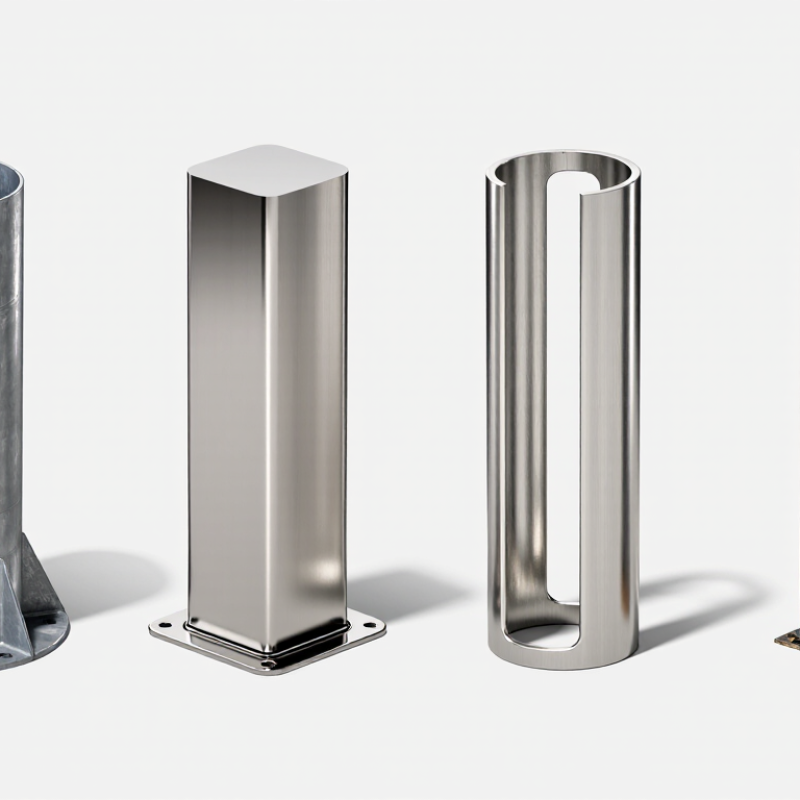
Metal posts are best classified by both their metal and their construction. Steel posts are common where stiffness and impact resistance matter. They may be hot-dip galvanized, painted, or made from weathering steel. Each finish responds differently to moisture, salt, and maintenance. Stainless steel suits corrosive settings, while aluminum is lighter and easier to handle. It can, however, bend more readily under comparable loads. The World Steel Association’s World Steel in Figures 2024 reports about 1.89 billion tonnes of crude steel production in 2023. That scale helps explain steel’s broad availability, but it does not determine which post suits a site. Details matter. A bare steel tube can look sturdy while hiding a thin wall or inadequate coating.
Construction is the next useful distinction. Tubular posts have hollow sections, with round or square profiles; their dimensions and wall thickness affect strength. Solid bars, angle sections, and H-shaped posts serve different load and attachment needs. Posts may be driven directly into soil, set in concrete, or bolted to a base plate. The right method depends on ground conditions, loads, and whether replacement access matters. For corrosion protection, the American Galvanizers Association’s guidance relates galvanized coating life to coating thickness and exposure environment. Specify both, rather than relying on “galvanized” alone. One detail is easy to miss: a strong post can still fail at a poorly drained base or loose connection. A comparison table helps, but it cannot replace checking the actual site conditions.
Steel Posts: Strength, Versatility, and Common Uses
What Are the Top Types of Metal Posts?
Steel Posts: Strength, Versatility, and Common Uses
Steel posts are a dependable choice when a structure needs firm support and a long service life. Their strength helps them resist bending under fences, gates, handrails, and light structural frames. Available as round or square tubes, steel posts suit different layouts and connection methods. Coatings such as galvanizing can slow rust, especially where rain or soil moisture is common. Still, no finish lasts forever.
Their versatility comes from matching the post’s size and wall thickness to its job. A slim tube may work for a garden fence, while a heavier section can support a gate that swings daily. Steel is also easy to cut and attach with suitable tools, though accurate measuring matters. A post set too shallow can wobble. Poor drainage may speed corrosion. Details count.
Tips: Check the post’s load rating, dimensions, finish, and installation instructions before buying. Protect cut edges, and avoid trapping water inside hollow sections. For coastal or persistently damp locations, ask a qualified supplier or installer about corrosion protection. One easy oversight is judging size by appearance alone, without checking soil conditions or expected load.
Aluminum Posts: Lightweight Design and Corrosion Resistance
Aluminum posts are useful where crews must carry, position, or replace long sections by hand. The Aluminum Association’s Aluminum Design Manual gives aluminum a typical density of about 2,700 kg/m³, compared with roughly 7,850 kg/m³ for steel. That difference can make a post much easier to handle. On a wet morning, lighter sections can mean less effort moving materials across a muddy site. That matters on site.
Aluminum also forms a thin oxide layer when exposed to air, helping protect the metal from further corrosion. This makes it a practical choice for outdoor posts exposed to rain or humid air. Still, “corrosion-resistant” does not mean maintenance-free. Salt spray, trapped moisture, and contact with dissimilar metals can create problems, especially around fasteners and cut edges. The Aluminum Association’s guidance on aluminum corrosion describes these environmental and material factors. Check the post’s alloy, coating, wall thickness, and connection details against the actual site conditions. I have seen lightweight treated as automatically better; that is not always true. A slender post may flex more under load, so confirm structural capacity before choosing by weight alone.
What Are the Top Types of Metal Posts?
Aluminum Posts: Lightweight Design and Corrosion Resistance
Aluminum’s typical density is about 2,700 kg/m³, making it substantially lighter than common steels. Lower weight can make aluminum posts easier to handle, while their corrosion resistance depends on the alloy and environment. Values shown are typical approximate material densities.
Stainless Steel and Galvanized Posts: Protection Against Rust
What Are the Top Types of Metal Posts?
Stainless Steel and Galvanized Posts: Protection Against Rust
Stainless steel and galvanized steel are common choices when rust resistance matters. Stainless steel contains chromium, which forms a thin protective surface layer. For many outdoor settings, grades such as 304 can perform well; coastal air or frequent salt exposure may call for a more corrosion-resistant grade, such as 316. Galvanized posts use a zinc coating that helps protect the steel beneath. If the coating is scratched, zinc can also corrode in place of the exposed steel. Rust starts quietly. Check the post’s grade, coating method, and intended environment before buying. A low price alone can be misleading.
Tips: Keep posts clear of standing water and soil piled against the base. After cutting or drilling galvanized steel, protect exposed areas with a suitable zinc-rich repair coating. Follow the coating maker’s instructions, and inspect the repair over time.
Installation details matter. Avoid trapping moisture where a post meets a bracket, and use compatible fasteners to reduce corrosion around connections. Rinse salt and grime from exposed posts when practical. Neither stainless steel nor galvanizing makes a post maintenance-free; damage, poor drainage, and harsh conditions can shorten service life. It is easy to assume a shiny surface means lasting protection, but the right choice depends on the site and regular checks.
How to Choose a Metal Post for Its Intended Application
What Are the Top Types of Metal Posts?
Choosing a metal post starts with its job, not its appearance. Fence posts, sign supports, deck uprights, and light poles face different loads. A square steel post can offer convenient flat mounting surfaces, while round steel may suit rails or sleeves. For outdoor use, galvanized steel helps resist corrosion; stainless steel may be worth considering near salt or frequent moisture. Aluminum is lighter and naturally corrosion-resistant, but it may not suit every heavy-load application.
Check the expected load, post height, soil or surface conditions, and how the post will be fixed. A tall sign catches wind. A gate post must handle repeated movement. Both may need stronger sections and deeper footings than a short garden fence. Match the post’s wall thickness and dimensions to the project specifications, and confirm that its coating can tolerate cuts or drilled holes. Small details matter.
Think about installation, too. Will the post be set in concrete, bolted to a base plate, or driven into soil? Each method changes the support and maintenance needs. Measure carefully. A common mistake is choosing by diameter alone; wall thickness and connection design also affect performance. If the load or ground conditions are unclear, ask a qualified installer or engineer to review the plans. That extra check can feel fussy, but guessing can be costly.