10 Best Design Panel Manufacturers for Global Buyers

For global buyers, a design panel is more than a finish sample. It must suit the project, travel reliably, and perform under real conditions. A panel that looks calm beneath a showroom spotlight may behave differently in a humid room or beside a busy corridor. Small details matter: edge quality, surface consistency, installation method, and replacement availability.

The Global Alliance for Buildings and Construction’s 2023 Global Status Report found that buildings and construction accounted for 34% of global energy demand and 37% of energy- and process-related carbon dioxide emissions in 2022. Those figures make material choices worth closer scrutiny. Yet a low-impact claim alone cannot establish a product’s full environmental performance. Buyers should check technical data, test standards, certifications, and the scope of any environmental declaration.

Architect Carl Elefante, FAIA, former president of the American Institute of Architects, is widely associated with the reminder: “The greenest building is the one that is already built.” For panel projects, that idea encourages careful renovation and longer product life, not automatic replacement. It also raises practical questions about repairability and sourcing. Not every supplier answers them clearly.

This guide compares ten design panel manufacturers for international buyers. It considers product range, customization, documentation, quality control, and export readiness. Rankings cannot replace project-specific checks. A sample can still surprise you. Before ordering, confirm specifications, lead times, packaging, and after-sales support directly with the manufacturer.
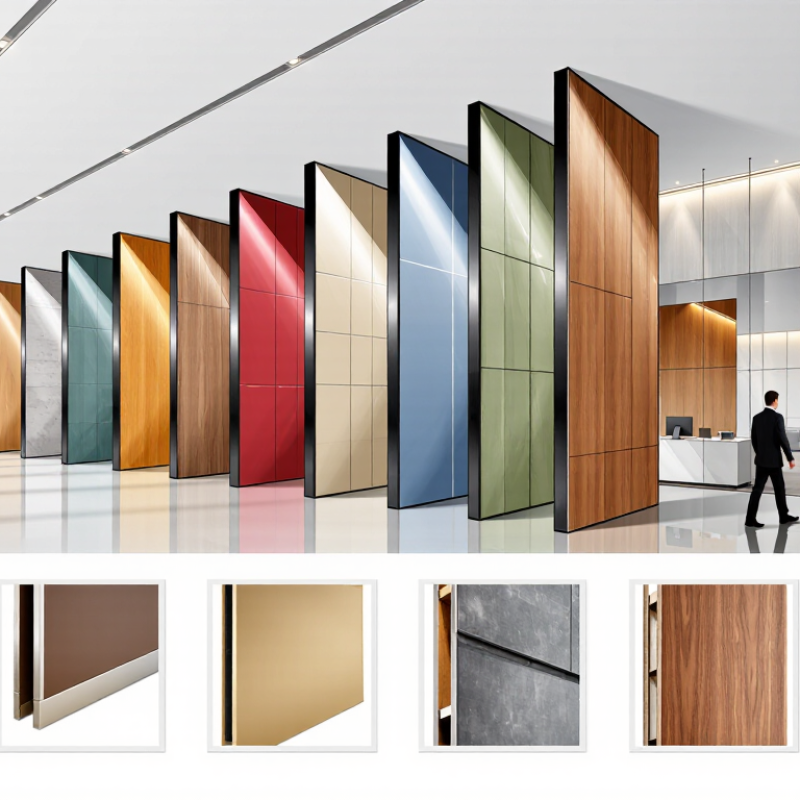
10 Best Design Panel Manufacturers for Global Buyers

Design Panel Types: ACP, HPL, Compact Laminate, and Fiber Cement

Design panels serve different needs, even when their surfaces look similar. Aluminum composite panels (ACP) are lightweight and easy to shape, making them useful for broad façades and curved details. Their core construction and tested fire performance vary, so check project specifications rather than relying on appearance. HPL panels offer decorative surfaces and good resistance to everyday wear. Compact laminate is thicker and self-supporting, often suited to partitions, washrooms, and exposed edges. It is dense, though, and can require stronger fixings.

Fiber cement panels provide a solid, mineral-based option for exterior cladding. They handle weather well when detailed and installed correctly, but cutting creates dust and needs proper controls. No panel is automatically maintenance-free. Joint design, drainage, substrate movement, and local exposure all affect long-term performance. A small sample can mislead; full-size panels may look different in changing daylight. Details matter.

Tips: Ask manufacturers for technical data, installation guidance, and relevant test reports. Compare panel weight, finish durability, edge treatment, and replacement access. Check how joints meet windows and corners. If possible, inspect a mock-up outdoors. It may reveal problems the brochure misses. Allow time to verify availability and lead times, since a suitable panel is less useful if it arrives too late.


Industry Benchmark: ASTM E84 Class A Requires FSI ≤25 and SDI ≤450

For global buyers, ASTM E84 Class A is a useful screening benchmark for interior design panels. The 2021 International Building Code, Table 803.1.1, defines Class A as a flame spread index (FSI) of 0–25 and a smoke-developed index (SDI) of 0–450. ASTM International’s E84 standard measures surface-burning characteristics under controlled conditions. These are test limits, not a guarantee of how a panel will perform in every fire.

Read the test report closely. Check that the tested panel matches the specified product in thickness, core, surface finish, and mounting method. Even a narrow air gap or a different substrate can make the test assembly unlike the installation. ASTM E84 results also do not describe every fire hazard or replace other code-required evaluations. A pass is not a promise.

Before approval, compare the report’s specimen description with the submittal and confirm the test date and standard edition. Ask whether the report covers the complete panel assembly or only a surface layer. That distinction is easy to miss. I would also check project-specific code requirements rather than assume Class A settles every question. The numbers look precise; the application can still be messy.

How to Assess 10 Leading Manufacturers by Materials, Certifications, and Capacity

Comparing ten design panel manufacturers requires more than a polished catalogue. Start with the panel’s intended use, then check its core material, surface finish, thickness tolerance, and resistance to moisture or abrasion. Request a current technical data sheet and a physical sample. A glossy finish can hide uneven edges; inspect cutouts and corners under clear light.

Certifications need careful reading. Verify the issuing body, validity dates, and whether the document covers the exact product and factory—not just the company. Quality-management or environmental certificates can inform supplier screening, but they do not replace product-specific test reports. Ask how batches are identified and what inspection records accompany an order. Details matter.

Production capacity is not just a monthly figure. Compare quoted output with your order size, seasonal demand, minimum order quantities, and stated lead times. Ask for a realistic production schedule and how defects or material shortages are handled. A factory tour or live video walkthrough may clarify equipment and storage conditions, though it cannot prove every process is consistent. Look for clear answers, matching documents, and sample quality that holds up after ordinary handling. Some gaps will remain; record them before ranking suppliers.

Global Manufacturer Profiles: Compare Product Ranges, Markets, and Compliance

Global Manufacturer Profiles: Compare Product Ranges, Markets, and Compliance

Choosing a design panel supplier means looking beyond finish samples. Compare MDF, plywood, particleboard, compact laminate, and other ranges by thickness, surface options, and documented performance. Small details matter. Ask for current test reports, not just a polished catalogue.

Market reach affects lead times and support. FAO’s Forest Products statistics track wood-based panel production and trade, offering useful context when comparing supply regions. The figures do not reveal factory-level consistency, though. Request sample panels and check whether quoted delivery times include finishing, packing, and customs preparation.

Compliance deserves equal attention. The 2023 Global Status Report for Buildings and Construction, published by UNEP and GlobalABC, estimated that buildings accounted for 34% of global energy demand and 37% of energy- and process-related CO2 emissions in 2022. That makes material choices relevant, but sustainability claims need evidence. Compare emissions data, sourcing documentation, and fire or moisture test results against the requirements of each destination market. This comparison is not perfect: standards differ, and certificates may cover only specific products or production sites. Verify the scope before shortlisting.

Global Design Panel Manufacturers: Typical Product Thickness Ranges

Indicative thickness ranges for common architectural panel products; actual offerings vary by manufacturer, market, and application.

Thickness is only one comparison point for global buyers. Verify local code requirements and product documentation; standards such as EN 438, EN 12467, and EN 13501-1 apply to specific product or performance criteria and do not imply universal compliance.

Buyer Checklist: Verify EN 438, EN 13501-1, EPDs, MOQ, and Lead Times

For global design-panel sourcing, request current EN 438 test evidence for the exact panel type, finish, and thickness—not just a general product brochure. EN 438 covers decorative high-pressure laminates, but a result for one construction may not apply to another. For fire performance, ask for the EN 13501-1 classification report and confirm the tested build-up, including substrate and mounting method. Ask for evidence. A tidy certificate pack can still conceal a product mismatch. The checklist is not perfect: project-specific fire performance depends on the complete assembly, not the panel alone.

Request a product-specific, third-party-verified Environmental Product Declaration (EPD). Check its declared unit, scope, validity, and applicable product category rules before comparing figures. The UNEP and GlobalABC 2024 Global Status Report states that buildings and construction account for 32% of global energy use and 34% of energy-related CO₂ emissions. That makes transparent product data useful, though an EPD is not proof that one panel is automatically the lower-impact choice. Small details matter. Obtain written MOQ and lead-time figures for each finish and thickness, including samples, production, packing, and shipping. Ask whether quoted timing assumes stock or a new production run. A low MOQ may still mean a long wait for a special colour. Check the calendar twice.

10 Best Design Panel Manufacturers for Global Buyers - Buyer Checklist: Verify EN 438, EN 13501-1, EPDs, MOQ, and Lead Times

Supplier-neutral comparison checklist. These are verification criteria, not supplier-specific ratings or claims; confirm all product details directly with each manufacturer.

No. Buyer Check Evidence to Request How to Verify Comparison Record
1 EN 438 product scope Current technical data sheet and declaration identifying the applicable EN 438 part, product type, thickness, and intended use. Check that the cited standard and product description match the exact panel being quoted. EN 438 applies to high-pressure decorative laminates; it is not a universal standard for every decorative panel. Record document number, revision, and product reference.
2 EN 13501-1 fire classification Classification report and supporting test documentation for the offered product or assembly. Confirm the classification, substrate, thickness, mounting method, joints, and end-use conditions apply to the proposed installation. Record classification and report reference; mark unverified if evidence is missing.
3 Environmental Product Declaration (EPD) EPD covering the specific product, production site, and declared unit. Check the program operator, publication and validity dates, life-cycle scope, and whether the EPD follows the applicable product category rules, such as EN 15804 where relevant. Record EPD link, validity date, and product coverage.
4 Minimum order quantity (MOQ) Written MOQ by finish, color, thickness, size, and order type. Confirm whether the MOQ is per design, per production batch, or per shipment, and ask about sample and mixed-design orders. Enter the quoted quantity and applicable conditions; MOQ is supplier-specific.
5 Production and shipping lead times Written estimates for samples, standard orders, custom finishes, and repeat orders. Clarify when the clock starts, production versus transit time, shipping terms, and likely causes of schedule changes. Record quoted weeks, date, destination, and shipping terms; lead times vary by order.
6 Product specifications and tolerances Current technical data sheet listing dimensions, thickness options, tolerances, finish, and installation requirements. Compare the stated specifications with project drawings and applicable local requirements; confirm any custom sizes in writing. Record specification revision and deviations from project requirements.
7 Quality assurance and traceability Quality-control process, batch identification method, and available inspection records. Ask how production lots are identified and how defects, nonconformities, and corrective actions are handled. Record available batch records and the agreed inspection procedure.
8 Samples and finish consistency Physical samples, finish details, and written confirmation of the production reference. Approve a representative sample before ordering and establish how color or finish variation is assessed between batches. Record sample reference, approval date, and retained sample location.
9 Warranty and after-sales support Written warranty terms, exclusions, claims process, and technical support contact details. Check coverage period, geographic scope, maintenance conditions, and remedies for confirmed product defects. Record warranty document date and key exclusions.
10 Export and delivery readiness Quotation identifying delivery terms, packaging, shipping point, and required export or customs documents. Confirm the named destination, responsibility for freight and import formalities, packaging suitability, and document requirements before purchase. Record quotation date, delivery terms, and confirmed destination.