Global buyers assessing China’s exterior sheathing suppliers need more than a low unit price. They need panels that arrive intact, suit the wall assembly, and perform in local moisture and temperature conditions. A brochure cannot prove that.
The 2024 Global Status Report for Buildings and Construction, published by UNEP and the Global Alliance for Buildings and Construction, reports that buildings and construction used 32% of global energy demand in 2022. The sector also accounted for 34% of energy- and process-related carbon dioxide emissions. Sheathing alone cannot determine a building’s performance. Still, durable enclosure choices matter.
Building-science expert Dr. Joseph Lstiburek offers a pointed reminder: “All buildings are perfect until they get wet.” That warning makes moisture control and drying potential worth close attention. Buyers should compare panel type, thickness, bond classification, edge treatment, test reports, quality controls, packaging, and technical support. Specifications should match the intended installation, not merely the sales pitch. Samples can help, but they do not replace verifiable test data. A supplier may look strong on paper, while questions about moisture cycling or replacement batches remain unanswered. That doubt is healthy. This guide examines how global buyers can weigh verified performance, dependable communication, and total delivered cost when comparing China-based suppliers.

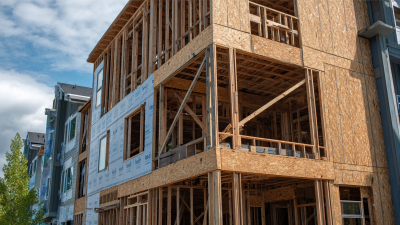
Exterior sheathing is the layer fixed to the outside face of a building’s wall framing, beneath the cladding. It may be made from wood panels, gypsum, cement-based boards, or other materials suited to the project. The right choice depends on the wall design, exposure, and installation details—not just the panel name.
Sheathing can help stabilize framed walls and provide a firm base for later layers. In a complete building envelope, it also works alongside the water-resistive barrier, flashing, insulation, and cladding. These parts have different jobs. Sheathing alone should not be treated as waterproof protection. Rain that slips behind siding needs a clear drainage path, while seams and openings need careful detailing.
Small details matter. A poorly sealed window corner or panel joint can let moisture reach the framing. That is easy to overlook. On site, check product instructions, fastener spacing, edge support, and compatibility with the specified barrier system. Requirements vary with climate and wall design, so project documents should guide selection. Even a suitable panel can underperform when storage or installation is careless. The weak point is often the connection, not the board.
Exterior sheathing must resist wind loads, moisture, and installation damage while providing a stable base for cladding. Wood structural panels, including plywood and oriented strand board (OSB), are common choices. APA’s Engineered Wood Construction Guide explains the 24/16 span rating: a rated panel can span up to 24 inches on center for roof use and 16 inches for floor use, subject to the specified installation. Ratings matter. Plywood’s cross-laminated veneers help resist dimensional movement, while OSB’s bonded strands provide consistent panel coverage. Both can swell when exposed to prolonged wetting. The USDA Forest Products Laboratory’s Wood Handbook notes that wood strength changes with moisture content, so dry storage and prompt enclosure are practical safeguards.
Glass-mat gypsum sheathing offers a non-wood option beneath many cladding systems. It is dimensionally stable, but edges and fastener locations still need protection from repeated water exposure. Fiber-cement panels resist rot and insect damage, yet they are heavier and often require more careful cutting and fastening. They are not automatically a substitute for structural bracing. Check the product’s evaluation documents and wall design. A detail easily missed: the sheathing may be sound while seams, openings, or flashing let water behind it. Material selection should match the exposure, cladding, and framing system—not just the panel’s advertised strength.
| Material | Typical Form and Thickness | Structural Performance | Moisture and Weather Considerations | Thermal Performance | Common Uses and Selection Notes |
|---|---|---|---|---|---|
| Plywood | Panels commonly range from about 6 mm to 19 mm (1/4 in to 3/4 in); thickness depends on framing spacing, loads, and the panel specification. | Structural grades can provide wall bracing and support for wind loads when correctly specified and fastened. Check the panel grade, span rating, and local code requirements. | Suitable for construction use when the specified panel rating is appropriate. It can swell or delaminate if exposed to prolonged wetting; it is not a finished waterproof layer. | Low insulating value; typically used with insulation in the wall assembly. | Often selected where structural panel performance, job-site familiarity, or reliable fastening is important. Performance varies by veneer quality, grade, and adhesive specification. |
| Oriented Strand Board (OSB) | Structural panels are commonly available in thicknesses of roughly 7 mm to 18 mm (7/16 in to 23/32 in), subject to regional product standards. | Rated OSB panels can provide structural bracing when their span rating, orientation, edge support, and fastening meet the design requirements. | Panel edges may swell when repeatedly or persistently wet. Exposure-rated panels are intended for defined construction exposure, not indefinite weather exposure; install the specified water-resistive barrier and cladding system. | Low insulating value; continuous or cavity insulation is normally required to meet energy targets. | A widely used structural sheathing option. Confirm the applicable panel standard, exposure classification, and installation instructions for the project climate. |
| Glass-Mat Gypsum Sheathing | Commonly supplied in panels around 12.7 mm to 15.9 mm (1/2 in to 5/8 in), with product-specific sizes and edge details. | Generally serves as a nonstructural sheathing substrate; it should not be assumed to provide wall bracing unless a tested system or code-approved design specifically permits it. | Designed for improved resistance to moisture exposure compared with standard paper-faced gypsum board, but it is not waterproof and should be protected from prolonged wetting and installed as part of a complete wall system. | Low insulating value; insulation is provided separately. | Used beneath many exterior cladding systems and in assemblies where a gypsum-based, noncombustible substrate is specified. Follow the product’s joint treatment and weather-barrier requirements. |
| Wood Fiberboard Sheathing | Common panel thicknesses are approximately 12 mm to 25 mm (1/2 in to 1 in); availability and density vary by product. | Typically offers less racking strength and fastener-holding capacity than structural plywood or OSB. Separate bracing may be required unless the product is specifically rated for structural use. | Can be vulnerable to prolonged moisture exposure, depending on product treatment and assembly design. Protect it with a suitable water-resistive barrier and avoid trapped moisture. | Provides more thermal resistance than thin wood structural panels, but usually does not replace code-required cavity or continuous insulation. | May be used where a lightweight, somewhat insulating sheathing layer is desired. Verify structural ratings, vapor characteristics, and compatibility with the selected cladding. |
| Rigid Foam Sheathing EPS, XPS, or polyisocyanurate |
Commonly supplied in boards about 13 mm to 102 mm (1/2 in to 4 in) thick; thickness is chosen to meet the project’s thermal and detailing needs. | Most foam boards are not substitutes for structural wall sheathing. Structural bracing is commonly provided by another layer or a specifically engineered assembly. | Water absorption, vapor permeance, and drying behavior differ by foam type and product. Boards and joints must be detailed as part of the complete water- and air-control strategy. | Adds continuous insulation and can reduce thermal bridging. Approximate R-values per inch often fall around R-3.6 to R-4.2 for EPS, R-4 to R-5 for XPS, and R-5.6 to R-6.5 for polyiso; actual values depend on product and temperature. | Useful when continuous insulation is a priority. Design attachment, cladding support, fire protection, and window and door transitions for the selected product and thickness. |
| Fiber-Cement Sheathing or Backer Panel | Panel thickness is product-specific; many exterior panels are roughly 6 mm to 12 mm (1/4 in to 1/2 in). | Typically not a replacement for structural wall bracing unless the tested assembly or applicable code explicitly assigns it a structural role. | Generally resistant to rot and many forms of moisture damage, but joints, edges, fasteners, and the wall assembly still require correct detailing. It is not a substitute for a water-resistive barrier. | Low insulating value; additional insulation is required where needed. | Used in selected exterior finish and tile-related applications. Confirm that the specific panel is approved for the intended exterior exposure and cladding system. |
Performance values and thicknesses are typical reference ranges, not product specifications. Actual performance depends on the product standard, grade, installation, climate, wall assembly, and applicable building code. Always verify current technical data and local requirements before selection.
China Best Exterior Sheathing Suppliers for Global Buyers
Assessing Chinese exterior sheathing suppliers starts with the product, not the sales brochure. Request a current technical data sheet and check thickness, density, edge details, and intended exposure conditions. Compare these figures with a physical sample. A clean sample is useful, but it cannot prove every production batch will match.
Ask for recent test reports and confirm which product specifications they cover. Check whether the issuing laboratory can be independently verified. Discuss factory quality controls, batch traceability, moisture protection, and packaging for long-distance shipping. Ask how the supplier handles a rejected batch or a delayed order. Details matter. A quick factory call may help, though it cannot replace a proper audit. I would also compare quoted lead times with the supplier’s actual production capacity; this step is easy to overlook.
Tips: Request samples from more than one batch, and inspect cut edges for crumbling or uneven layers. Get tolerances, inspection steps, and delivery terms in writing. Ask again if an answer sounds vague. No checklist removes all risk, and a polished presentation can still leave practical questions unanswered.
China’s exterior sheathing suppliers can differ widely in production controls, even when product dimensions look similar. Global buyers should ask how incoming wood, resin, and other materials are recorded and checked. On the factory floor, look for documented pressing temperatures, panel thickness checks, and clear batch identification. Small details matter. A clean edge and consistent surface can make installation easier, but neither proves performance on its own.
Quality control should connect factory checks with verifiable test records. Ask for current reports covering properties relevant to the intended use, such as moisture resistance, bond strength, or dimensional stability. Confirm that report descriptions match the product being quoted. Requesting samples is useful, too: inspect corners, faces, and thickness with simple measuring tools. No factory is flawless; an inspection sheet can still miss a recurring issue. Buyers should discuss how complaints are investigated and how corrective actions are recorded.
Export capability includes more than arranging a container. Suppliers should explain packing methods, moisture protection, pallet labeling, and how loading damage is reduced. Before production, confirm lead times, order quantities, document responsibilities, and whether updates include dated production or inspection photos. Clear communication helps, though time zones and changing schedules can still cause delays. A practical supplier makes those limits visible rather than promising an effortless shipment.
When comparing China-based exterior sheathing suppliers, request product-specific test reports, not just a catalogue. Confirm panel type, thickness, density, edge profile, and moisture limits against the project specification. For wood-based boards, check evidence for structural performance, fire behavior, moisture resistance, and emissions. Requirements and test methods vary by destination and wall assembly. Make sure reports identify the factory and match the production line. A polished certificate may describe another product. That detail matters.
Shipping needs equal scrutiny. UNCTAD’s Review of Maritime Transport 2024 reports that maritime trade volumes grew 2.4% in 2023 and discusses disruption-driven rerouting risks. Ask for pallet dimensions, gross weight, container loading plans, packaging photos, and a written moisture-protection method. Condensation can stain or swell exposed panels. Compare destination port charges, inland haulage, customs documents, insurance, and delivery terms in one landed-cost estimate. Allow time for pre-shipment inspection and document corrections. Delays happen. I would question a very low quote; packaging, testing, or claims handling may be excluded.